
Grove Lab
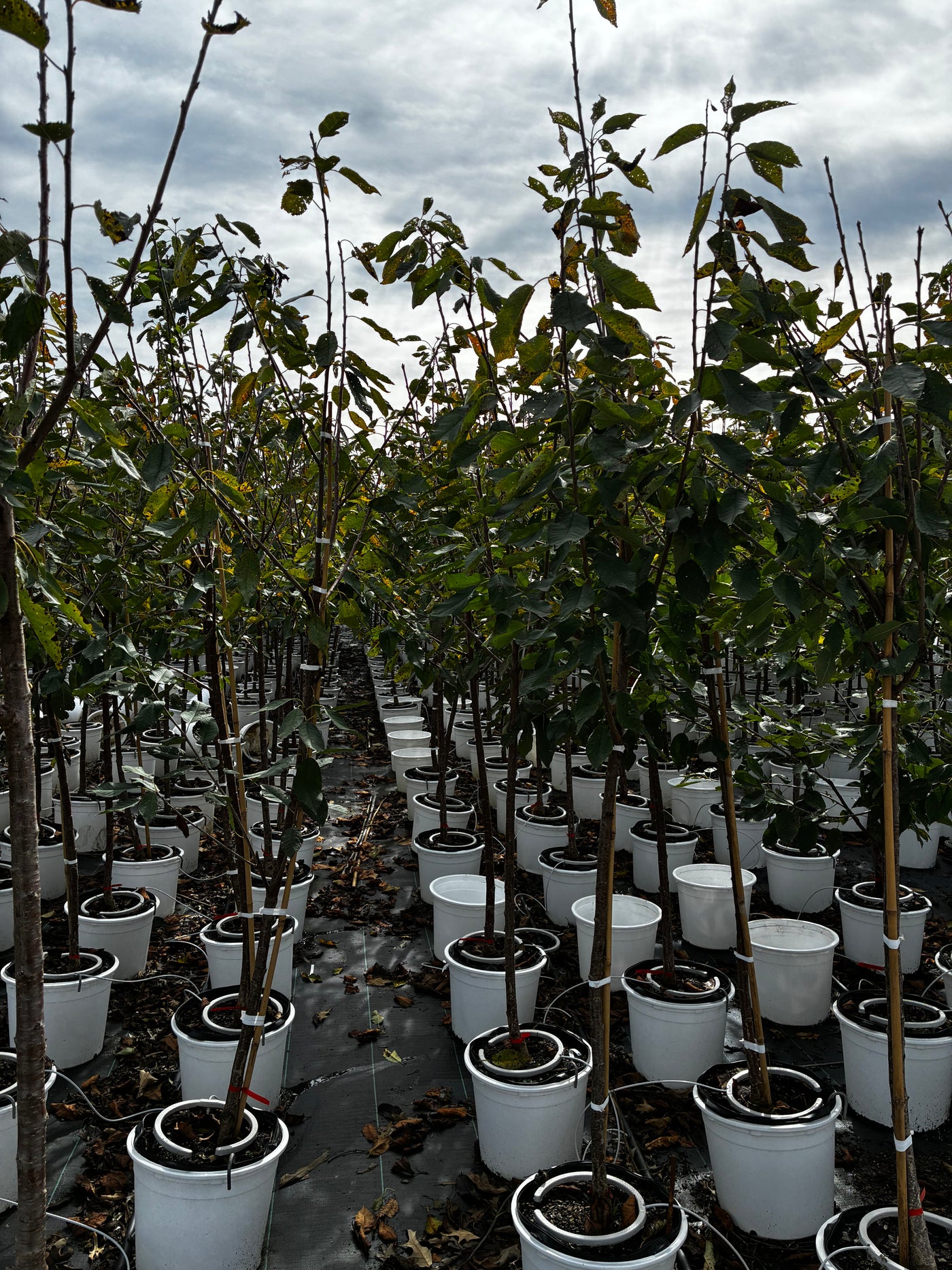
10 Gal - Cherry Tree
$150.00
| Sale size & specs | 10-gallon nursery container. The five named varieties are deciduous sweet cherries (Prunus avium), with spring flowers and summer fruit. The 3-in-1 is a multi-graft tree; its grafted varieties need confirmation. Current height and age vary. |
|---|---|
| Full sun? | Yes: at least 6 hours of direct sunlight each day, preferably more, in a site with good air circulation. |
| Soil | Moisture-retentive, well-drained soil. Avoid waterlogged spots; sweet cherries do not tolerate wet roots. |
| How to plant | Remove the container and gently correct circling roots. Dig a wide hole no deeper than the root ball; keep the root flare at the finished soil surface and the graft union above ground. Backfill, water thoroughly, and mulch away from the trunk. |
| Mature height & width | Sweet cherries commonly reach about 15–30 ft tall and wide; vigorous standard-rootstock trees can reach 30–40 ft tall. Dwarfing rootstocks and pruning can reduce size. Rootstocks for this product are unconfirmed; a 10-gallon sale pot does not determine mature size. |
| Ground or pot? | Ground planting preferred. Long-term container growing requires a suitable dwarfing rootstock, a larger draining container, and ongoing pruning and care. The 10-gallon nursery pot is intended for sale and transport. |
| How often to water | Check the root ball daily during early establishment. Water slowly and deeply when it begins to dry, keeping it evenly moist without saturating it. Once established, water during dry spells as needed. Adjust for rainfall, heat, and soil drainage; check pots daily in hot weather. |
| When does it fruit? | Harvest is generally in late spring to summer, depending on variety and climate. See relative harvest order below. Young standard sweet cherries often begin bearing in roughly 4–7 years after planting; dwarfing rootstocks can bear sooner. A first-season crop is not guaranteed. |
| Pollination | Black Tartarian, Brooks, Rainier, and Royal Ann need a different compatible sweet cherry with overlapping bloom. Stella is self-fertile. Two trees of the same self-incompatible variety do not solve the pollination requirement. |
| Seasonal care | Prune to maintain a strong, open canopy and protect ripening fruit from birds. Spring frost, pests, and disease can affect crops; rain close to harvest can split sweet cherries. |
| Variety | Estimated chill hours | Pollination | Fruit size & flavor | Harvest order |
|---|---|---|---|---|
| 3-in-1 Fruiting | Depends on grafted varieties | Confirm the three grafts and their bloom overlap; a separate tree may not be needed if compatible varieties are included. | Three varieties on one tree; fruit size, color, and flavor depend on its grafts. | Depends on grafts |
| Black Tartarian | ≈700 | Needs a compatible sweet cherry; Royal Ann or Stella are examples when bloom overlaps. | Small–medium, nearly black fruit; soft, juicy flesh with a rich, sweet flavor. | Early |
| Brooks | ≈500 or less | Needs a compatible sweet cherry; Rainier is an example when bloom overlaps. | Large, firm red cherry; sweet when fully ripe. | Early |
| Rainier | ≈700 | Needs a compatible sweet cherry; Black Tartarian is an example when bloom overlaps. | Large yellow cherry with red blush; very sweet, low-acid flavor. | Midseason |
| Royal Ann | ≈700 | Needs a compatible sweet cherry; Black Tartarian or Stella are examples. Bing and Lambert are incompatible. | Large pale-yellow fruit with red blush; firm, juicy flesh and sweet flavor; fresh eating or canning. | Midseason |
| Stella | ≈400 | Self-fertile; no second tree required. Bees still help pollinate the flowers. | Large, dark-red to nearly black sweet cherry; rich flavor. | Late |
Chill hours are approximate published winter-cold requirements, not frost-hardiness ratings; estimates vary among sources and climates. Harvest order is relative within the sweet-cherry season, not a guaranteed date. Fruit size and flavor vary with ripeness and growing conditions. Pollination requires compatible varieties, overlapping bloom, and pollen transfer. Stella is distinct from Compact Stella.