
Grove Lab
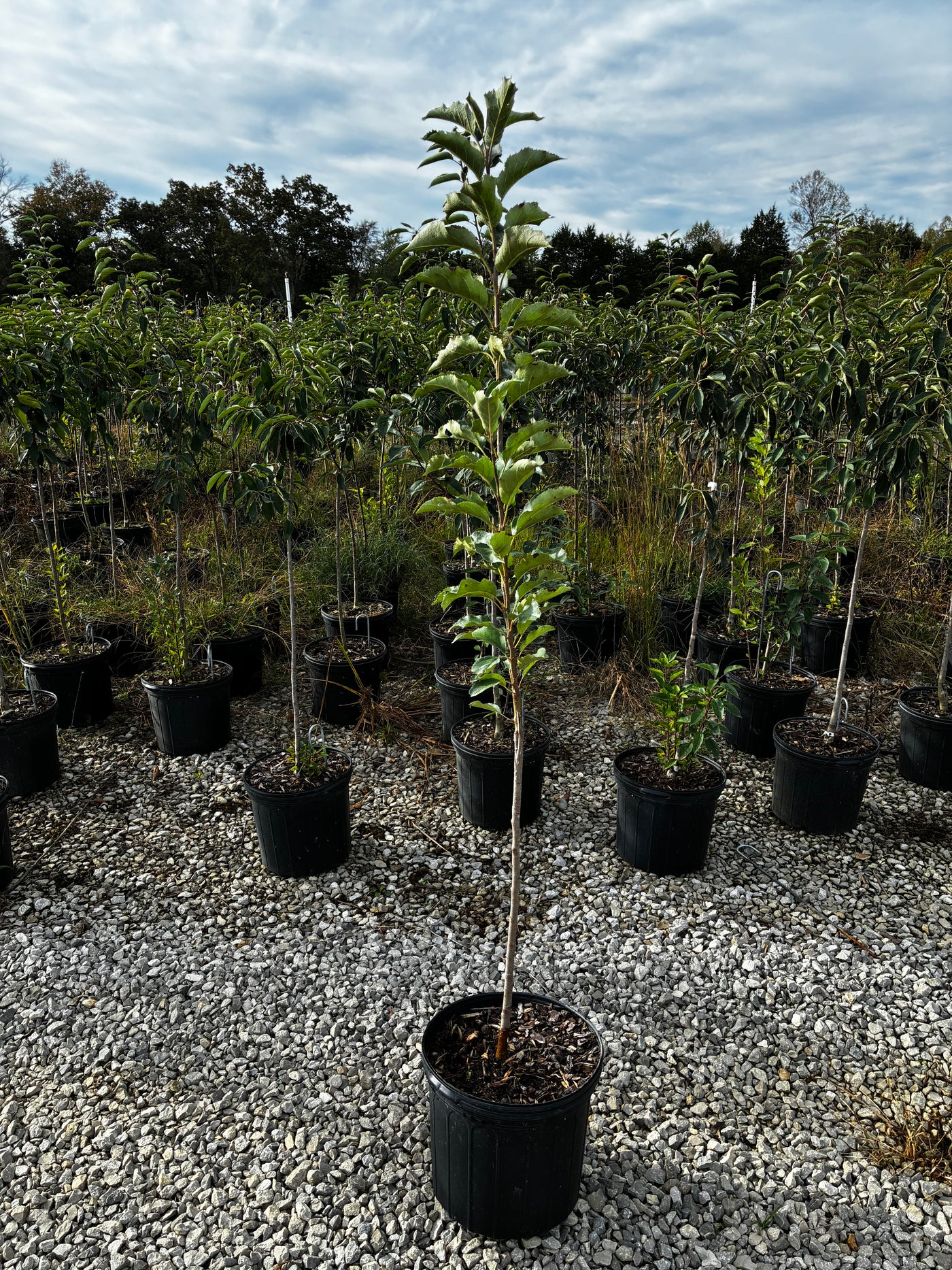
5 Gal - Apple Tree
$100.00
| Sale size & specs | 5-gallon nursery container. Deciduous apple trees (Malus domestica) with spring flowers and a seasonal fruit harvest. Current tree height and age vary; the sale container does not determine mature size. |
|---|---|
| Full sun & soil | Full sun: at least 6 hours of direct sunlight daily, preferably more. Choose fertile, well-drained soil and good air circulation; avoid standing water. |
| How to plant | Remove the pot and gently correct circling roots. Dig a wide hole no deeper than the root ball. Set the root flare at finished soil level and keep the graft union above ground. Backfill, water thoroughly, and mulch around the root zone without touching the trunk. |
| Mature height & width | Rootstock is the main size control: dwarf apples are often about 8–12 ft tall and wide, semi-dwarfs about 12–20 ft, and standards about 20–30 ft or more. Cultivar, site, and pruning also matter. These are general size estimates by rootstock type, rather than a prediction based on the 5-gallon pot. |
| Ground or pot? | Ground planting preferred. Long-term container growing requires a suitable dwarfing rootstock, a larger pot with drainage, support where needed, and ongoing root and canopy care. A 5-gallon nursery pot is not a permanent container recommendation. |
| How often to water | Check the root ball daily during early establishment. Water slowly and thoroughly when it begins to dry, keeping it evenly moist without saturating it. Adjust for rainfall, heat, and drainage. Established trees need water during dry spells; check container trees daily in hot weather. |
| When does it fruit? | Fruit generally ripens from late summer through fall, depending on variety and climate. Dwarf trees may start cropping about 2–3 years after planting; larger trees often take about 5 years or longer. Age, rootstock, and establishment affect timing; no first-season crop is guaranteed. |
| Pollination | For reliable harvests, plant a different compatible apple or suitable crabapple with overlapping bloom. Two trees of the same variety are not a cross-pollination pair. Arkansas Black, Shizuka, and Stayman should not be relied on as pollen donors; plan two other compatible pollen-producing varieties that can also pollinate each other. |
| Pruning & fruit thinning | Prune annually to maintain a strong, open canopy. Thin excess young fruit to improve fruit size and reduce alternate-year bearing. Spring frost, weather, pests, and disease can reduce crops. |
| Variety | Estimated chill hours | Fruit size & flavor | Harvest season | Pollination |
|---|---|---|---|---|
| Arkansas Black | ≈600 | Medium, dark-red apple; very firm, tart when picked, mellower after storage. | Fall | Needs compatible pollen. Not a reliable pollen donor; plan two other compatible pollen-producing varieties. |
| Dixie Red† | ≈800 | Medium–large red apple over a yellow background; firm, aromatic, spicy and sweet-tart; flavor improves in storage. | Late fall–early winter | Plant another compatible apple with overlapping bloom for reliable cropping. |
| Gala | ≈500–600 | Medium, crisp apple with red-orange skin; mild, sweet flavor. | Late summer | Cross-pollination recommended for reliable crops, even where partly self-fruitful. |
| Granny Smith | ≈600 | Medium–large green apple; firm, crisp, juicy, and tart. | Late fall | Cross-pollination recommended for reliable crops, even where partly self-fruitful. |
| Honey Crisp (Honeycrisp) | ≈800 | Large apple with a crisp, juicy texture and balanced sweet-tart flavor. | Early–mid fall | Needs another compatible apple with overlapping bloom. |
| Pink Lady / Cripps Pink | ≈300–400* | Medium–large pink-blushed apple; very crisp, juicy, and sweet-tart. | Late fall | Cross-pollination recommended for reliable crops; self-fruitfulness varies with climate. |
| Red Delicious | ≈800–900 | Medium–large red apple; crisp flesh with a mild, sweet flavor. | Fall | Needs another compatible apple with overlapping bloom. |
| Red Rome | ≈700 | Large, firm red apple with mild flavor; especially good baked because it holds its shape. | Late fall | Often listed as self-fruitful; cross-pollination improves cropping. |
| Shizuka | ≈800–1,000 | Large yellow to yellow-green apple; firm, juicy, sweet, and low in acidity. | Fall | Triploid: needs compatible pollen and cannot pollinate other apples. Plan two other compatible pollen-producing varieties. |
| Stayman Winesap | ≈800‡ | Medium–large red apple; firm, juicy, aromatic, and tart to sweet-tart. | Fall | Not a reliable pollen donor. Plan two other compatible pollen-producing varieties. |
Chill hours are approximate published winter-cold requirements, not frost-hardiness ratings. Harvest seasons vary by climate; these are not guaranteed dates. Mature size and first-bearing figures are estimates and depend on the rootstock and growing conditions.